Yellow Billed Hornbill Redwork: A Designer's Review
As an embroidery designer who has spent years digitizing and stitching for boutique brands, I approach every new machine embroidery design with a critical eye. It is not just about whether the bird looks like a bird; it is about how that image translates into thread on a specific fabric texture. Recently, I evaluated the Yellow Billed Hornbill Redwork for an upcoming limited drop of premium sweatshirts. This review breaks down why this specific pattern stands out for small shop products and how it performs in a real-world commercial setting.
First Impressions and Design Personality
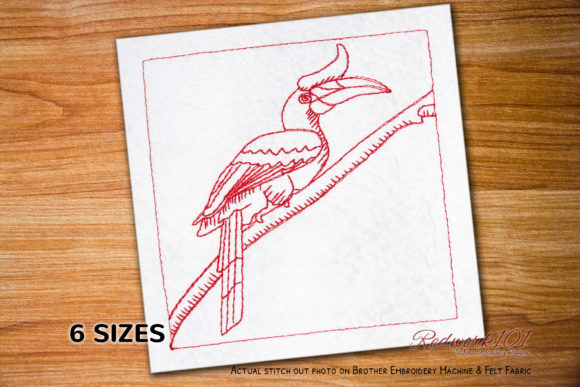
The moment I loaded the digital embroidery file into my editing software, the clean lines of the redwork style jumped out. Redwork is a classic technique that relies on a single color of thread to create outline-based imagery, and this design captures the essence of the hornbill without unnecessary clutter. The mood is distinctly rustic yet playful, striking a balance that is perfect for modern apparel decorators who want something cute but not childish.
The layout feels intentional. The silhouette of the Yellow Billed Hornbill is recognizable immediately, which is crucial for brand identity. In the world of custom apparel, visual recognition happens in seconds. If a customer scrolling through an Etsy listing cannot identify the subject instantly, they keep scrolling. This design solves that problem with strong, confident strokes. The "stitching personality" here is light and airy, avoiding the heavy, dense fills that can make a sweatshirt feel stiff or uncomfortable against the skin.
Fabric Compatibility and Color Theory
One of the most exciting aspects of reviewing the Yellow Billed Hornbill Redwork was testing it across different fabric bases. For this boutique project, we are looking at neutral sweatshirts in oatmeal, charcoal, and soft pastels. Because redwork typically uses a single thread color, the contrast is everything.
- Neutral Sweatshirts: On an oatmeal or cream fleece, a deep crimson or brick-red thread creates a warm, organic look that feels very handmade and high-end.
- Dark Fabrics: When placed on charcoal or navy hoodies, the design demands a brighter red or even a coral hue to ensure the details of the beak and crest remain visible.
- Pastel Colors: For a spring collection, placing this design on sage green or lavender oversized hoodies adds a pop of whimsical energy without overwhelming the garment.
The description notes that the outer box stitch shown in pictures is optional. As a professional, I highly recommend skipping the box unless it serves a specific framing purpose for your brand logo. Removing the box allows the Yellow Billed Hornbill Redwork to breathe, making it feel more like an artistic illustration and less like a stamped badge. This flexibility is vital for creating a cohesive boutique brand aesthetic.
Placement Strategies for Boutique Collections
Where you place your embroidery file dictates the vibe of the finished product. For this specific bird design, I see three distinct opportunities for sweatshirt embroidery:
- Chest Placement: A small to medium size on the left chest is the gold standard for premium casual wear. It feels understated and expensive, appealing to customers who prefer minimal decor.
- Sleeve Accents: Running the hornbill vertically up the forearm or placing it near the cuff adds a unique detail that encourages close inspection. This works beautifully for handmade product lines where uniqueness is the selling point.
- Back Designs: Scaling the design up for the upper back of an oversized hoodie creates a bold statement piece. The simplicity of the redwork line art ensures that even at a larger scale, the stitch density does not become too heavy for the fabric.
For lifestyle product photography and printable mockup creation, this design shines because it photographs well from multiple angles. The lack of dense fill means there are no strange shadows or puckering issues that often plague low-quality digitizing, resulting in cleaner images for your online store.
Technical Considerations for Production
Before running a production batch, there are practical concerns every Etsy seller and apparel decorator must address. While the design appears robust, the success of the finished product depends on your setup.
First, consider the stabilizer. Since we are likely working with thick fleece or French terry cloth for sweatshirts, a cut-away stabilizer is essential. Even though redwork has lower stitch counts than fill designs, the stretchiness of knit fabrics requires permanent support to prevent distortion after washing. Tear-away stabilizers might leave the design vulnerable to shifting over time, which could damage buyer trust.
Second, verify the hoop size and small-size readability. The prompt does not specify exact dimensions or stitch counts, so it is imperative to check the file properties before purchasing or hooping. If you plan to embroider this on a small area, such as a pocket or a child's garment, ensure the fine lines of the beak do not merge together. You may need to request a resized version from the digitizer if the original is too large for your intended application.
Thread choice is another variable. Using a matte cotton thread instead of shiny polyester can enhance the rustic, natural feel of the hornbill, aligning perfectly with current trends in eco-friendly fashion. However, if durability and colorfastness are your primary concerns for commercial embroidery, high-quality polyester remains the industry standard.
Elevating Brand Value and Customer Engagement
In the saturated market of online retail, design assets like the Yellow Billed Hornbill Redwork are more than just images; they are tools for storytelling. Birds represent freedom, nature, and perspective. By incorporating this motif into your collection, you tap into those associations subtly.
A well-executed embroidery job signals quality. When a customer receives a sweatshirt where the stitching is crisp, the fabric lies flat, and the design is perfectly centered, their perception of your brand's value increases. This leads to higher customer engagement, repeat purchases, and positive reviews. For a small shop product, these details are the difference between a one-time sale and a loyal following.
Furthermore, the versatility of this design allows for seasonal adaptability. It fits seamlessly into spring collections focused on nature awakening, but also works for autumn layers when paired with earth tones. This longevity makes it a smart investment for your library of embroidery files.
Final Verdict for Creators
The Yellow Billed Hornbill Redwork is a standout choice for designers looking to add character to their apparel without sacrificing comfort. Its clean lines, adaptable nature, and charming subject matter make it ideal for everything from cozy seasonal apparel to year-round staples. Just remember to double-check the technical specs regarding hoop size and stabilize your fabric correctly. With the right execution, this design will undoubtedly become a favorite in your custom apparel lineup, helping your brand stand out in the crowded world of handmade and boutique fashion.