Ashiko Drum Redwork: A Rhythmic Choice for Modern Embroidery
There is a specific kind of satisfaction that comes from opening a new machine embroidery design folder and finding something that speaks to both tradition and modern minimalism. As someone who spends hours hooping fabric, testing tension, and critiquing stitch paths for my small shop, I approach every new file with a mix of excitement and skepticism. Recently, I spent some time evaluating the Ashiko Drum Redwork design, and it immediately stood out as a piece that bridges the gap between cultural appreciation and versatile embroidery project utility.
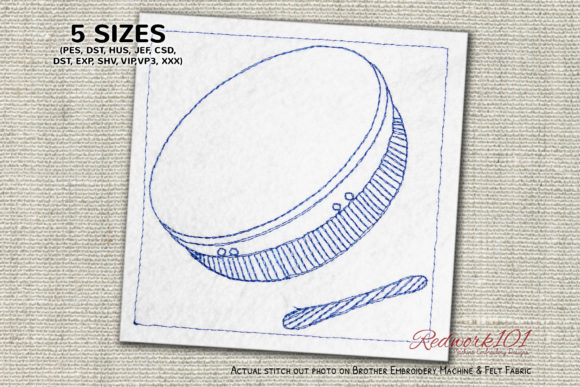
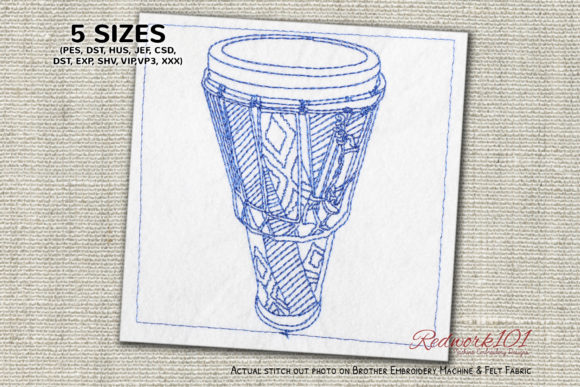
The first thing you notice about this design is its mood. Redwork has always held a special place in the hearts of embroiderers for its clean, graphic quality, relying on a single thread color to create depth through line work rather than dense fills. The Ashiko Drum motif captures the essence of Music without being cluttered. It feels rhythmic, grounded, and organic. For an Etsy seller or a boutique owner looking to expand their catalog beyond generic floral patterns, this offers a distinct visual personality that suggests craftsmanship and soul.
Visualizing the Finished Product in Real Scenarios
To truly understand the value of an embroidery file, you have to move past the digital preview and imagine the finished product in a customer's hands. I started picturing this design on a heavy canvas tote bag design. The linear nature of the drum sits perfectly against the texture of natural cotton or linen. Because redwork typically utilizes running stitches or light satin outlines, it doesn't overwhelm the fabric. Instead, it becomes part of the material's story.
I also considered how this would translate to custom apparel. Imagine a charcoal grey sweatshirt with the Ashiko Drum stitched in a deep brick red or a classic crimson. The contrast would be striking but not loud. This isn't a design that screams for attention; it invites a closer look. For a handmade product line focused on musicians, music teachers, or world culture enthusiasts, this design serves as a subtle badge of identity. It works exceptionally well as a pocket detail on an apron or a centered motif on a kitchen towel, adding a touch of artistic flair to everyday items.
The description notes that the box stitch shown in pictures is optional and that the outer box color often differs or can be skipped entirely. This flexibility is a huge plus for a professional designer. It means I can adapt the Ashiko Drum Redwork to fit different branding needs. If I am making a personalized gift for a drummer who prefers a minimalist aesthetic, I might skip the box entirely to let the drum shape float freely. If I am creating a patch for a jacket, keeping the box provides a defined border that makes the embroidered patch look more structured and official.
Technical Performance and Stitching Considerations
When moving from concept to the hoop, practical realities take over. Redwork designs are generally forgiving because they lack the high density of fill stitches, which reduces puckering and fabric distortion. However, the success of the Ashiko Drum Redwork still depends heavily on your setup. Since this is likely composed of running stitches and perhaps some light satin work for definition, your choice of stabilizer is critical.
On stretchy fabrics like jersey knits used for baby embroidery or t-shirts, a cut-away stabilizer is non-negotiable. Even though the stitch count might be low, the tension of the thread can cause the fabric to gather over time if the backing isn't robust enough. On woven fabrics like twill or canvas, a tear-away might suffice, but I always recommend testing on scrap fabric first. You need to see how the machine handles the corners of the drum and the curves of the ropes. Sharp turns in redwork can sometimes look jagged if the digitizing isn't precise or if the machine speed is too high.
One area requiring careful attention is the hoop size. While redwork is often compact, you must confirm the dimensions before committing to a project like a cap or a small pouch. Curved surfaces like baseball caps present their own challenges; the curvature can distort circular or cylindrical shapes like a drum. If you plan to use this for sweatshirt embroidery on the sleeve or a hat, ensure the design scales down without losing the integrity of the drum's proportions. Tiny details can get lost if the design is resized too aggressively.
Color Theory and Fabric Texture
The beauty of redwork lies in its monochromatic simplicity, but that doesn't mean you are stuck with just one shade. The term "redwork" is historical, but modern threads offer a spectrum. For the Ashiko Drum Redwork, I experimented mentally with different thread colors. A rust orange against navy blue creates a warm, autumnal feel suitable for holiday embroidery. A bright scarlet on white muslin feels traditional and crisp. A deep burgundy on black fabric offers a sophisticated, tonal look that appeals to a more mature demographic.
Fabric texture plays a massive role in how this design is perceived. On a smooth broadcloth, the lines will appear sharp and precise. On a textured waffle weave or a rustic linen, the stitches will blend slightly with the weave, giving the design a softer, more vintage appearance. This versatility makes it an excellent asset for a craft business that sells across different price points. You can offer a premium version on high-end linen and a budget-friendly version on standard cotton, using the same digital embroidery file.
Commercial Viability and Brand Consistency
For those running a small shop product line, consistency is key. The Ashiko Drum Redwork offers a level of professionalism that builds customer trust. It doesn't look like a clip-art afterthought; it looks like a deliberate design choice. When customers see clean lines and thoughtful composition, they associate that quality with your entire brand. This design could easily become a signature element in a collection focused on rhythm, culture, or artisanal goods.
However, before listing this as a commercial embroidery item, you must verify the licensing terms. The product description hints at flexibility with the box stitch but does not explicitly state the license type for resale. Always confirm whether the file allows for unlimited finished goods sales or if there are restrictions on the number of items you can produce. Never assume a file is free for commercial use unless it is clearly stated. Protecting your craft business means respecting intellectual property rights just as much as protecting your stitch quality.
Final Thoughts on Design Utility
In the world of Embroidery, trends come and go, but designs that honor specific themes with clarity and style tend to have staying power. The Ashiko Drum Redwork is not just a picture of an instrument; it is a design that understands the medium it lives in. It respects the limitations of the needle and thread while maximizing visual impact.
Whether you are creating a printable mockup for your online store or stitching a real sample for a craft fair booth, this design holds up under scrutiny. It encourages creativity in color selection and fabric pairing while maintaining a strong structural identity. Just remember to check the specific file details regarding the optional box and color variations before you start stitching. With the right preparation and a keen eye for detail, this design can elevate a simple piece of fabric into a meaningful, marketable work of art.